Wednesday 6 May 2026
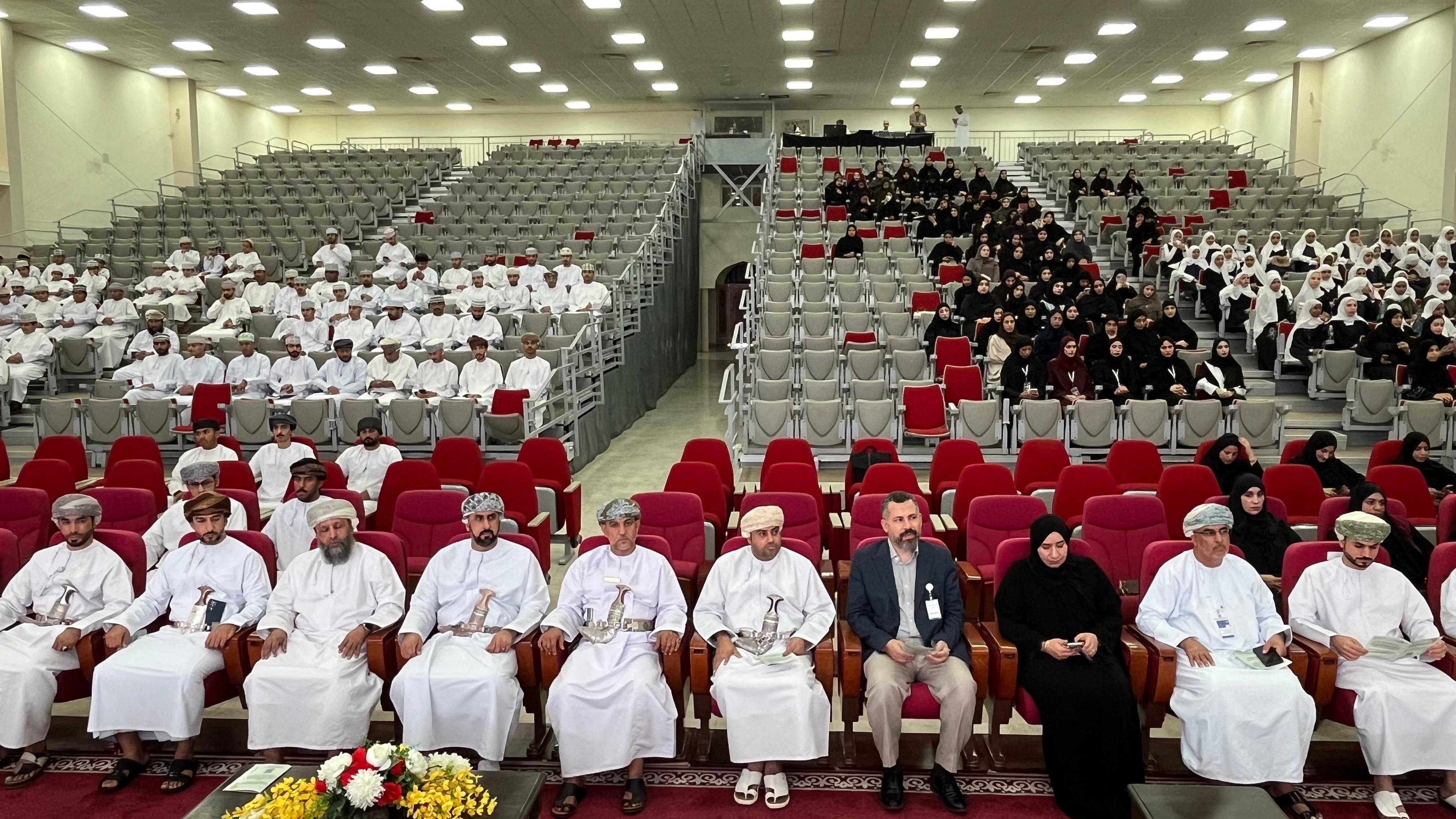
The Consumer Protection Department in Al Dakhiliyah Governorate organized the “Responsible Consumption and Production Forum” on Tuesday, 5 May 2026, under the patronage of Dr. Mohammed bin Rashid bin Hamdan Al Maamari, Assistant Vice-Chancellor of the University of Technology and Applied Sciences – Nizwa branch, in partnership with the University. This initiative reflects the Authority’s commitment to strengthening collaboration and promoting sustainable consumption concepts in line with Oman Vision 2040 and global sustainability trends.
The forum aimed to raise awareness of consumer rights, introduce prohibited goods, and encourage environmentally responsible practices. It also focused on strengthening partnerships with academic institutions, promoting knowledge exchange, and building capacities to prepare a generation capable of adopting responsible consumption and production behaviors.
Additionally, the forum emphasized supporting research and innovation to develop sustainable solutions for contemporary challenges, and enhancing cooperation among government entities, the private sector, and the community to promote moderation, reduce waste, and optimize resource utilization.
The forum program included a speech delivered by Ali bin Salem Al Hadhrami, Director of the Consumer Protection Department in Al Dakhiliyah, along with working papers, panel discussions, and an interactive student exhibition addressing issues related to responsible consumption and production, as well as prohibited goods, with participation from various government entities and students from universities and schools.
At the conclusion of the forum, the Consumer Protection Authority affirmed that this initiative is part of its ongoing efforts to promote a culture of responsible consumption and strengthen community partnerships, contributing to the achievement of sustainable development goals and Oman Vision 2040, and reflecting the national direction toward building a conscious society that manages its resources efficiently and reduces negative consumption and production practices.